
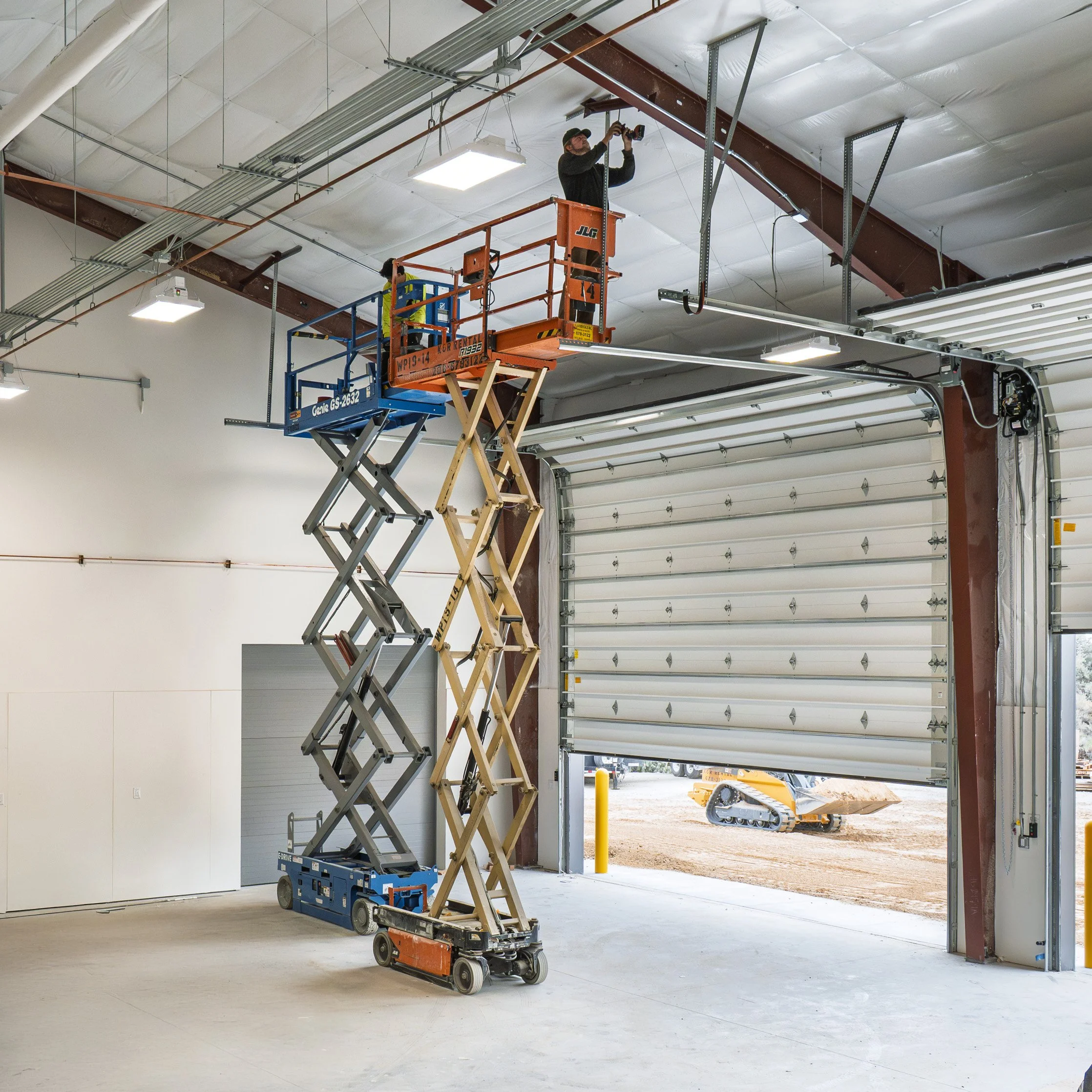
Commercial doors, specified for how hard they will work
Sectional doors, rolling steel and high-speed openings for shops, warehouses, dairies and ag operations. The specification starts with the cycle count, because that is what decides whether a door lasts five years or fifteen.
What we install
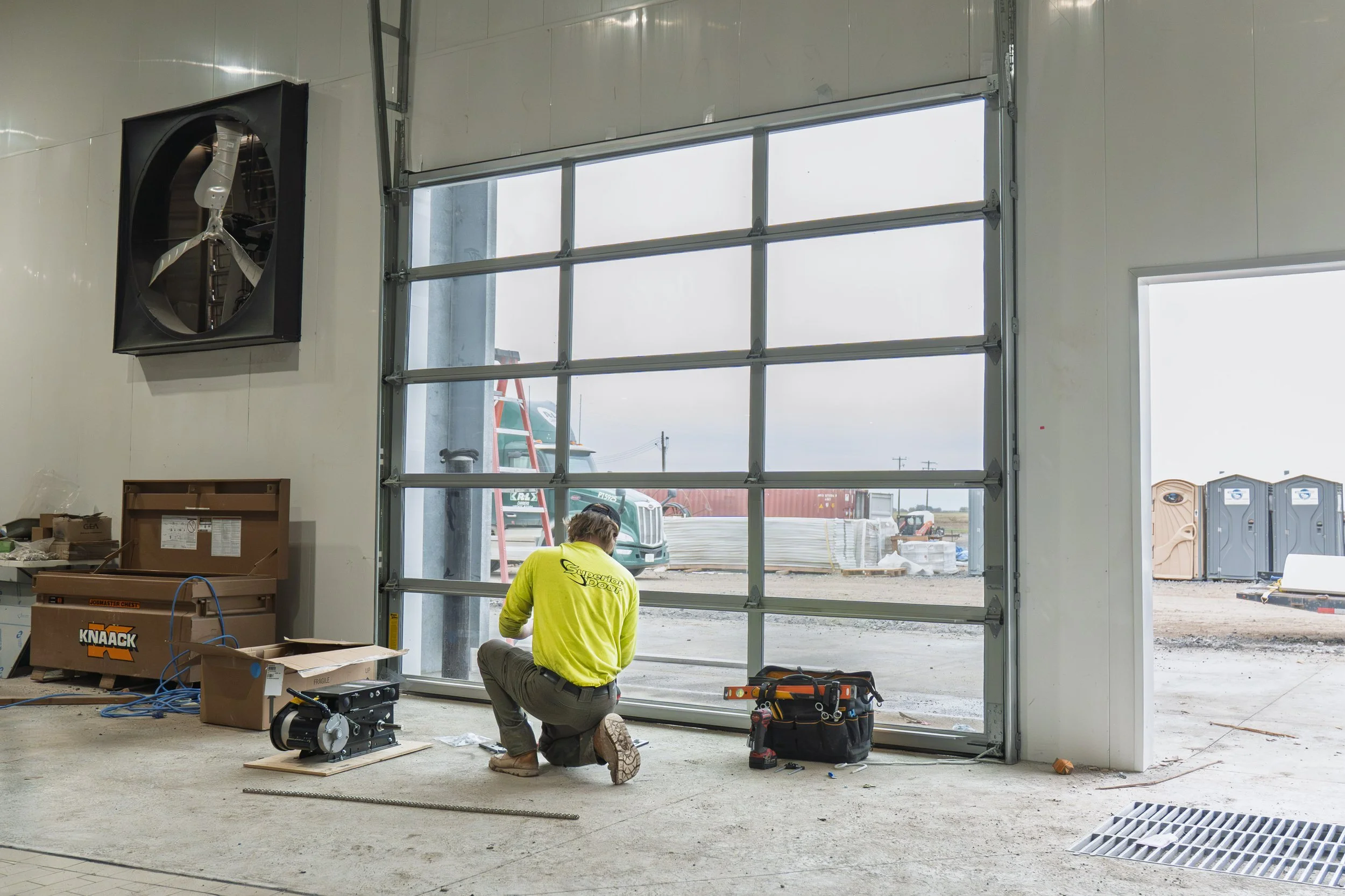
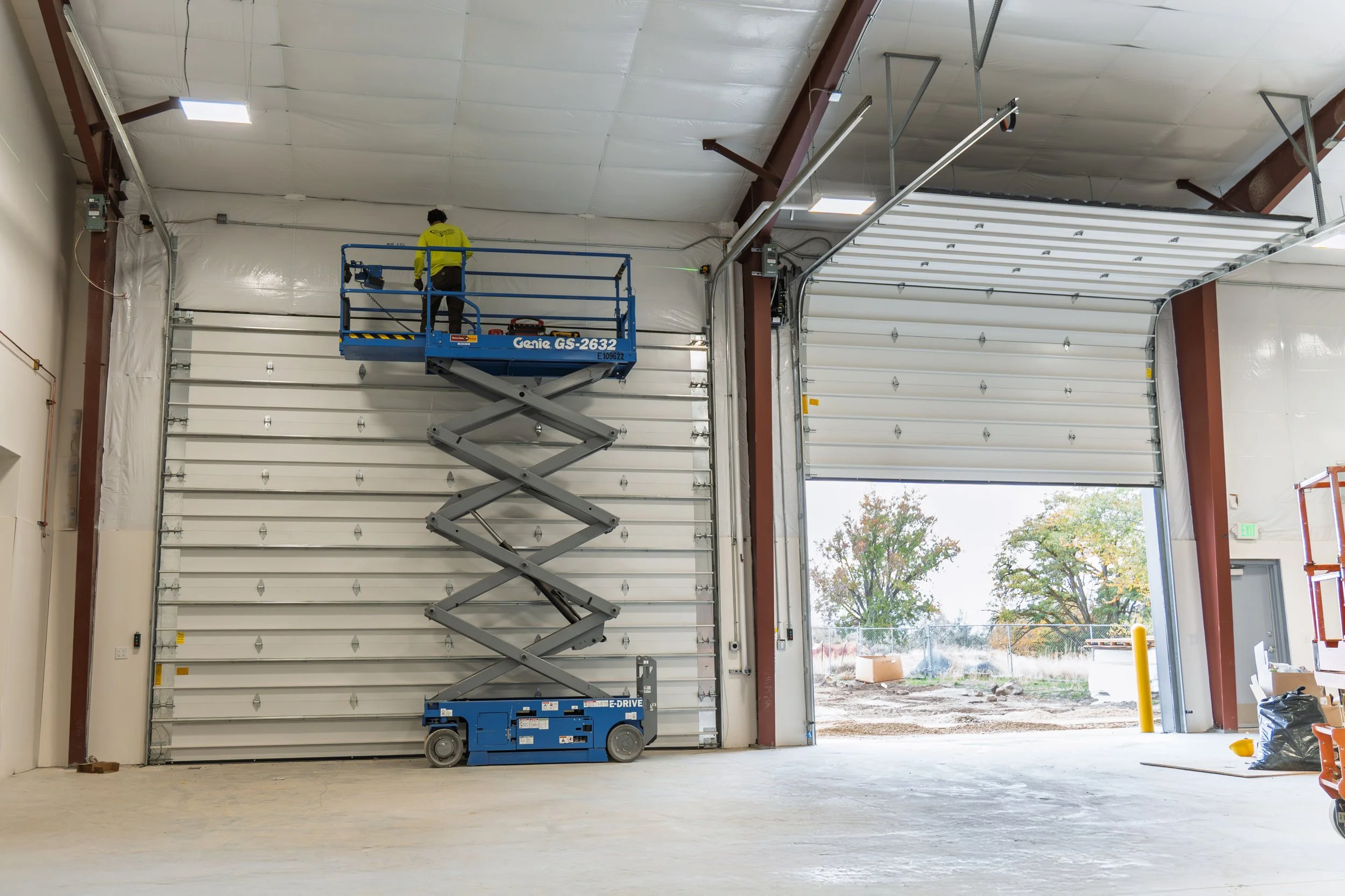
Doors chosen for the building and the traffic through it.
- Insulated and non-insulated sectional doors
- For shops, warehouses and ag buildings, with glazing where the space needs daylight.
- Rolling steel
- Where headroom is tight or the opening takes traffic, including fire-rated assemblies.
- High-cycle hardware
- Springs and bearings rated for the traffic, so a door cycling constantly is not fitted with residential-grade parts.
- Commercial operators and controls
- Jackshaft and trolley units, three-button stations, safety edges and photo eyes to match the way the opening is used.
- Dock equipment
- Levellers, seals and shelters, specified alongside the door rather than as an afterthought.
Getting the specification right
Most commercial door failures we attend are a specification problem rather than a manufacturing one.
What drives the spec
- How many cycles a day the opening actually sees
- Whether traffic is forklift, truck or foot
- Headroom and backroom in the opening
- Whether the building is heated or refrigerated
- How much downtime a failure would cost you
- Whether the opening needs to be fire-rated
What happens on the visit
- We measure the opening and confirm headroom and backroom
- You get a cycle count recommendation, not just a size
- Lead time is quoted when you order, and we hold delivery to your schedule
- Install is scheduled around your shifts where we can
- The finished door is cycled under load and the safety devices tested
Specification questions
How do you decide between sectional and rolling steel?
Headroom, traffic and what the opening has to survive. Rolling steel suits tight headroom and busy openings; sectional suits insulated buildings and wider spans. We will tell you which your building wants.
What is high-cycle hardware and do we need it?
Springs and bearings rated for many more cycles than standard. If a door runs more than about twenty times a day it usually pays for itself, because the alternative is a spring failure during a shift.
Can you work around our operating hours?
Where we can, yes. Tell us the shifts when you book and we will schedule the install to minimise the time the opening is down.
Do you install fire-rated doors?
Yes, including the drop testing and the documentation that goes with them.
Can the install go on a PO?
Yes. The quote comes before the order, so it can go through your process before anything is committed.
More answers on the full FAQ page.
Where we work
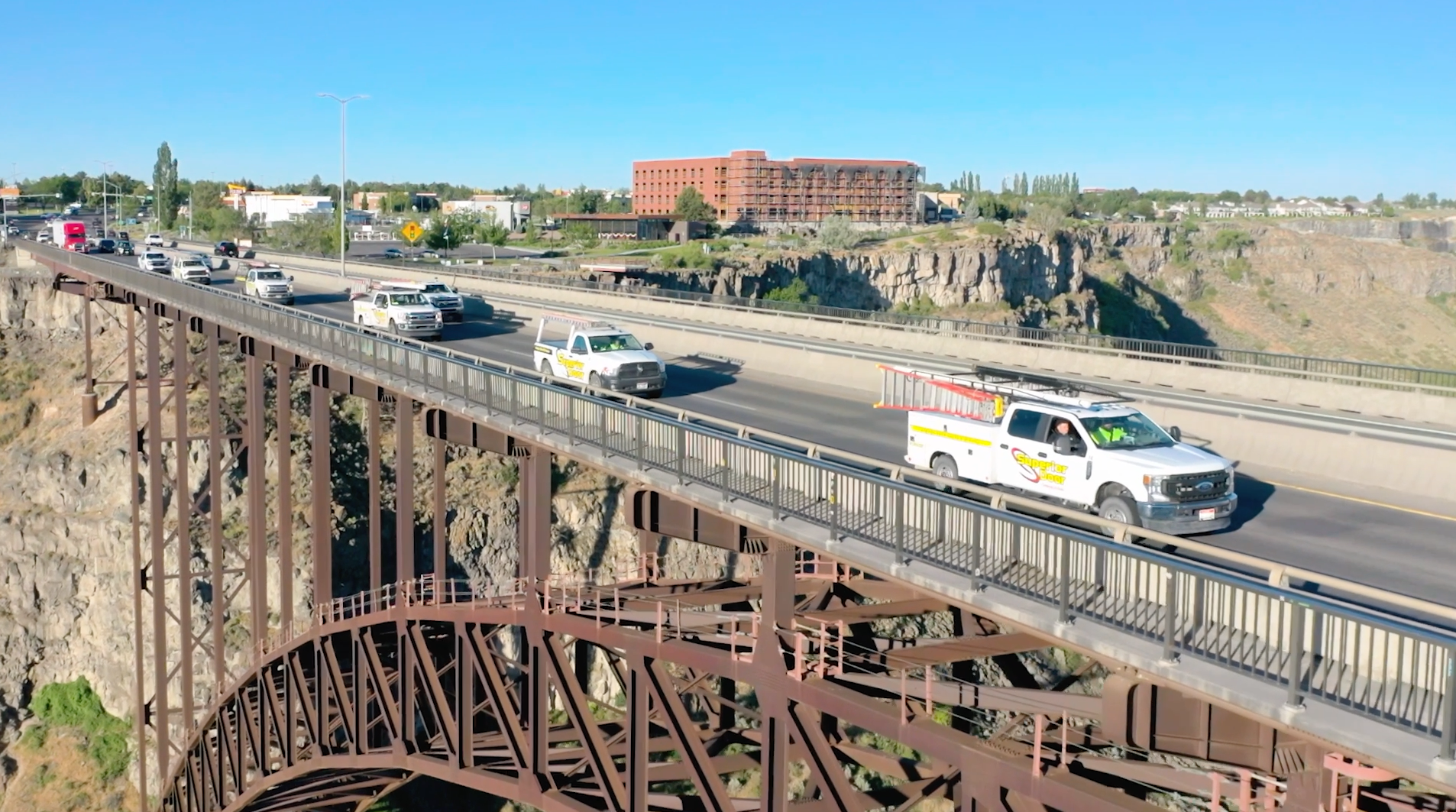
Two shops cover most of Southern and Eastern Idaho between them. Call the one closest to you and you reach the shop that sends the truck, not a call center.
Magic Valley & Wood River Valley
Dispatched from the Kimberly shop, 473 Hankins Rd S
(208) 734-4657Twin Falls, Kimberly, Jerome, Filer, Buhl, Hansen, Wendell, Gooding, Burley, Rupert, Heyburn, Shoshone, Castleford, Hazelton, Eden, Murtaugh, Paul, Declo, Hailey, Ketchum and Bellevue.
Eastern Idaho
Dispatched from the Idaho Falls shop
(208) 273-1557Idaho Falls, Pocatello, Chubbuck, Blackfoot, Rexburg, Shelley, Ammon, Rigby, Iona, Ucon, Firth, Sugar City, St. Anthony and Menan.
Not on the list? Call and ask. We go further than the map suggests.
Talk specification before you talk price
A door that is right for the traffic costs less over five years than the cheapest one that fits the hole.